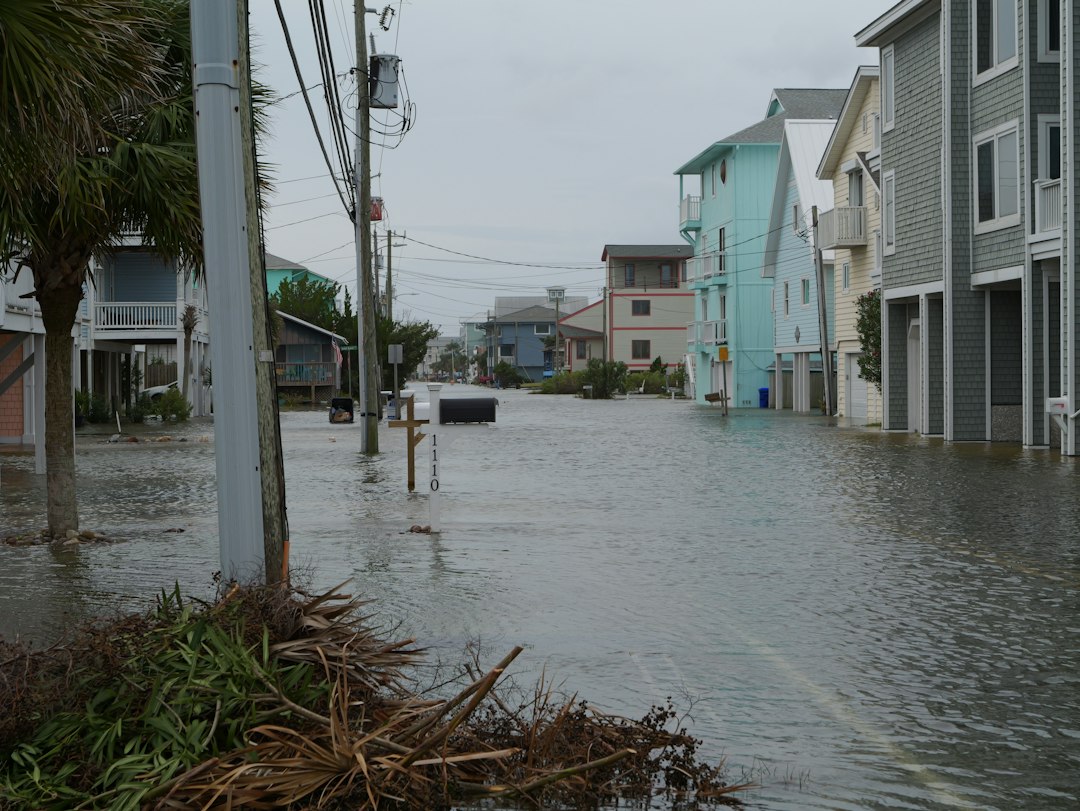
A house can be full of water and still leave the owner arguing about which insurance policy applies.
That is because “water damage” is not one insurance category.
A burst pipe inside the house, rain entering through a damaged roof and rising water from a river or storm surge can be treated very differently. For one of the most financially destructive scenarios — flooding — most standard homeowners insurance does not provide coverage.
Flood insurance exists because ordinary homeowners coverage usually excludes flooding
The National Flood Insurance Program states this directly: most homeowners insurance does not cover flood damage.
That means an owner who assumes the standard home policy will pay after rising water enters the property may discover the gap only after the loss.
Flood insurance is therefore a separate layer of protection rather than an automatic part of a typical homeowners policy.
The most useful distinction is where the water came from
This is the line people repeatedly get wrong because every scenario ends with the same visual result: water inside the house.
- Rising surface water from outside: usually a flood-insurance issue.
- River overflow, storm surge or widespread runoff: generally flood.
- A burst pipe inside the house: generally a homeowners-policy question, subject to the policy terms.
- Sewer or drain backup: may require a homeowners endorsement unless the backup was directly caused by a qualifying flood.
- Sump-pump overflow: similarly depends on cause and coverage.
NFIP guidance is explicit that sewer backup, drain backup, sump overflow and seepage are generally excluded from the federal flood policy unless a qualifying flood in the area is the proximate cause.
That distinction is far more useful than asking whether “water damage” is covered.
What counts as a flood matters
Insurance coverage depends on the cause of the water, not merely the fact that something got wet.
The NFIP describes flooding as excess water on normally dry land affecting the required area or number of properties under its policy definition. Common examples include overflowing rivers, storm surge and surface water from heavy rain.
By contrast, water from a broken pipe inside the home may fall under homeowners coverage rather than flood insurance, depending on the policy and circumstances.
Rain can fall into either category depending on how it enters
This is where the distinction becomes less intuitive.
Rainwater accumulating on the ground and then flowing into a home can qualify as flood damage.
Rain blown through an opening in a damaged roof may instead be treated as wind-related or homeowners-policy damage, depending on the policy and what caused the opening.
The same storm can therefore create separate losses governed by different coverages.
Living outside a high-risk flood zone does not mean zero risk
Flood maps are often treated as if they divide the country into “floods” and “does not flood.” They do not.
FloodSmart says almost one-third of NFIP flood claims from 2014 through 2024 came from areas outside current high-risk flood zones.
A lower mapped risk can affect lending requirements and premium decisions, but it is not a guarantee that flooding will not occur.
When is flood insurance required?
Owners with certain government-backed mortgages on property in a Special Flood Hazard Area are generally required to carry flood insurance.
Lenders may impose additional requirements as a condition of the mortgage.
Owners outside those mandatory zones can still purchase flood coverage when eligible.
Federal disaster assistance is not a substitute for insurance
Another common assumption is that FEMA will make the homeowner whole after a major flood.
Federal disaster assistance depends on a presidential disaster declaration and is not available after every flood. Even when assistance exists, it is not designed to function like comprehensive property insurance.
That distinction is important because many localized flood events never receive a presidential disaster declaration at all.
What does an NFIP policy cover?
NFIP coverage is divided into building coverage and contents coverage.
Building coverage can include the structure and certain systems and permanently installed components. Contents coverage applies to eligible belongings inside the home.
The two are distinct. Having coverage for the building does not automatically mean every personal possession is insured to the same extent.
Coverage limits matter
NFIP policies have coverage limits, and owners with higher-value homes or belongings may consider private flood insurance or excess coverage depending on what is available.
The key planning question is not simply “Do I have flood insurance?” but “What exactly is insured, for how much, and under which policy?”
Sewer backup coverage is often something you have to add deliberately
People commonly discover this only after a basement fills with sewage or a sump pump fails.
The National Association of Insurance Commissioners lists sewer or drain backup as a common optional homeowners coverage rather than something consumers should assume is automatically included. An endorsement or rider can add protection that the base policy does not provide.
That means a useful policy review is not simply “Do I have homeowners insurance?” It is “Do I have water-backup or sump-overflow coverage, and what limit applies?”
The flood-policy waiting period is usually 30 days
For NFIP coverage, the standard waiting period is generally 30 days before a new policy or an increase in coverage becomes effective.
There are important exceptions. Coverage purchased in connection with making, increasing, extending or renewing certain mortgage loans can take effect without the ordinary waiting period. There are also special rules for newly mapped high-risk areas and certain post-wildfire flooding.
The practical consequence is simple: buying flood insurance because a hurricane or atmospheric-river forecast suddenly looks frightening may be too late for that event.
Flood insurance can have a waiting period
Flood coverage is generally something to arrange before water is on the forecast map.
Many flood policies are subject to waiting periods before coverage becomes effective, although exceptions can apply in particular circumstances.
Buying insurance after a storm is already approaching may therefore be too late for that event.
What to check in your own insurance file
- Does your homeowners policy explicitly exclude flood?
- Do you have a separate flood policy?
- Does that flood policy cover both the structure and contents?
- What are the limits and deductibles?
- Is the property in a mapped high-risk area?
- Does the mortgage require flood coverage?
- When does the policy become effective?
Insurance disputes often turn on definitions that seemed unimportant before a loss. “Water damage” is one of them.
The safest assumption is not that water inside the house means the homeowners policy will respond. The source and mechanism of the water matter.
| National Flood Insurance Program — Eligibility | Homeowners-policy exclusions, eligibility and mortgage requirements. |
| NFIP — What Is a Flood? | Flood definitions, examples and distinction from other water damage. |
| NFIP — What Is My Flood Risk? | Risk outside high-risk zones and recent claim distribution. |
| NFIP — Buy a Flood Insurance Policy | Building and contents coverage and policy limits. |
| NFIP — Buy a Flood Insurance Policy | Sewer-backup distinctions, waiting periods and major exclusions. |
| NAIC — Homeowners Insurance | Optional sewer/drain-backup coverage and homeowners-policy structure. |
| NFIP — Flood Insurance 101 | Standard 30-day waiting period and major exceptions. |